
Without structure for your content, you end up posting here there and everywhere with a random behind-the-scenes post on a Tuesday because you couldn't think of anything else, and then somehow never sharing the behind-the-scenes of your business ever again. It's not a strategy, it's just movement without a destination. Sure, you throw enough spaghetti and eventually something might stick, but it doesn’t build momentum, and it isn’t a repeatable component of a strategy.
Consistent content isn't just about posting on a regularly. That’s a fairly central part of it, sure but it also includes showing up across the same topics, so that the right audience can create any form of connection to your business.
It's easy to lean into what you enjoy talking about and let the rest fall away, continually going back to that one topic that might also get the most engagement. Before long, whole parts of your business have gone unmentioned for months and people don’t even know large parts of our story. Content pillars are what keep things balanced, so your audience gets a complete picture of your business over time.
Content pillars are the core topics your business shows up around, consistently. They're the buckets your content lives in and compiled together, they tell a clear story about who you are, what you do, and why it matters. Over time, your audience gets a cohesive picture of your brand rather than a random collection of posts.
How to choose your pillars
Start by thinking about what your business actually offers and why people choose you. Your pillars should map back to those things. Not to what's trending, or what you feel like posting on a whim, but to what's genuinely relevant to your audience and your offer. Those trending things and random thoughts can then be posted if they relate to a pillar.
Some good starting points are:
What you offer: a pillar for each product, service, category, or area of expertise
Why it matters: the benefits your customers experience, the problems you solve
Proof it works: testimonials, reviews, case studies, results
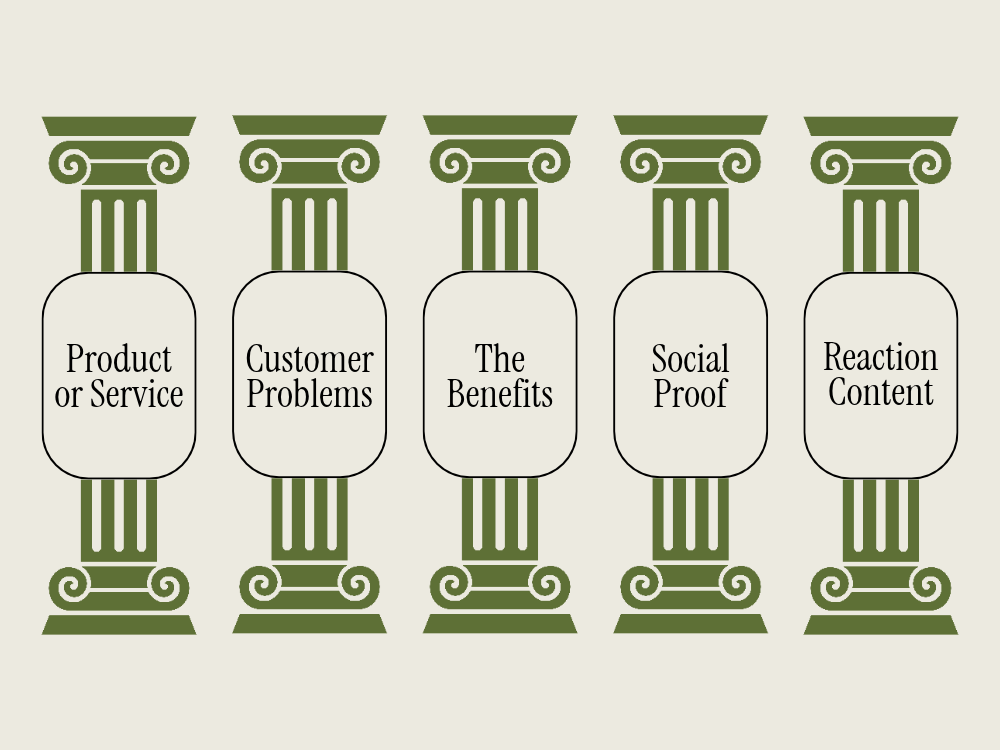
With this approach, you’d have some from each point.
Some businesses operate in a narrow niche, but can still benefit from pillars, so that their online presence doesn’t become one note. If all your content is essentially about one subject or is a personal brand, you can vary your pillars by style instead, rotating through educational, entertaining, funny, timely, and relatable content. Same destination, through different vehicles.
Keep in mind that each pillar doesn’t have to be an equal portion of your content calendar. You might post about your services a quarter of the amount you share the why. It just shouldn’t be completely forgotten, to where people who have seen a month of content don’t know what you sell.
You don't need to map out every road on day one. A few solid pillars give you enough variety to keep things interesting while keeping your content focused on what you actually do. If you later realise a pillar is missing, you can add it in.
Breaking your pillars down into ideas
Once you've got your pillars, the next step is turning them into a stack of actual content ideas. This is where things start to feel genuinely manageable.
For each pillar, brainstorm every sub-topic, question, or angle you can think of. What do your customers always ask? What misconceptions come up constantly? What results are they hoping for? Write it all down to refer back to later.
I compile mine in two ways. Years ago I made a stack of index cards. When I sit down to write a blog post, or plan an email, I can flick through the stack and something always sparks. I could flick through them to pick out topics. This only had one line, so more recently I created a whole Notion database of topics, grouped by pillar, and every time I write on a topic, I add the content into the database. Over time I’ll have hundreds of words across countless topics.
When it comes time to create something, I’ve already done a lot of the thinking, so I just have to choose which road to take today.

Mockup of your content calendar
What this looks like in practice
Say you run a local café. Your three pillars might be:
The menu: showcasing dishes, drinks, specials, and the story or inspiration behind them
The experience: atmosphere, team, behind-the-scenes moments
Community: local events, partnerships, your regulars
Every piece of content you’d create would branch off of those three. Someone new to your page immediately understands what you're about. Someone who's been following you for months develops a genuine connection to the layers as they see more things.
This still leaves room for trends, timely content, and a few experiments. But hopefully you don’t get half way through the year and realise none of your dining experience is showcased.
That's the real value of content pillars. Not just that they make content easier to create (although they do), but that they make your brand easier to recognise, trust, and remember.
Let’s build the foundation of your content calendar. The road trip starts here.